Sunday, 22 March 2015

Light and Dark - 5 Photos

For my theme I chose light and dark. I really like messing with the light levels within photos and furthermore controlling the light level altogether. That is why you will see in my five photos the immense presence of human light and the lack of natural as personally by using man made light it further emphasises both the subject of the composition and the depth of the photo in its entirety.

By manipulating the ISO, aperture and shutter speed I was able to entirely alter the amount of light that appeared in the composition and to what standard. More often than not it was a high ISO (1800+) with and wide aperture (f/5-f/6) and average shutter speed (1/80-100.) This did change but are the average settings that I will have used.

I wanted to capture depth, that is the whole reason for light and dark as I can really make the viewer either feel really small or really big or even isolated. That was my main aim with the photos anyway was to use light to give a sense of depth.


I called this 'Grey Night.' I used an aperture of f/4, shutter speed of 1/40 and ISO of 320 all being for the fact that the light I used to illuminate the composition was very bright and the camera found it easy to pick up. The idea was to illuminate the surroundings equally with the light originating from the centre and the further out the composition the darker it gets. This is to add volume and depth to the things closest to the light and give a idea of the shape and texture. I masked out the frosted glass to maintain the colour because it centres the subject and by only having one colour as the light then it gives everything a baseline for depth. Upon reflection I would arrange the objects to the right of the photo to more aesthetically pleasing ones - perhaps more reflective - or dynamic in shape to offer variation as there is on the left hand side like the cake tin, dying flowers and candle holders.


The idea behind this photo was to create an environment we the flowers were entirely illuminated by the candle to once again show depth. Taking it from down low allowed the flowers to tower and take up more of the composition and give a sense of over arching on the viewer. I cut and placed the candle below and to the side to only partly illuminate the flowers allowing a dynamically lit subject. If I was to retake the photo I would remove the bowl in the background and zoom into the flower a bit more closer to see the difference in light level more effectively.


In this photo it was all about capturing the face and its smoothness, roughness, curves and bumps as effectively as possible. To do this I only felt I needed half of the subjects face so I took the photo side on with the light slightly right of where the subject is facing. By doing this it cast a shadow across his face highlighting his dimples and parts of his skin. It is this immense detail I wanted to draw the viewers attention and the expression upon the subjects face. Upon reflection I would use a larger aperture to incorporate more of the subjects facial detail.


By utilising long shutter speeds I was able to create the lines of light in the image. Rotating the camera in certain directions also meant that I was able to manipulate the strands of light both in their volume and pattern. This separates the photo into different sections allowing variation and depth to the composition. 


The photo itself is abstract styled with deliberate light. I wanted to add depth to the composition while maintaining still and abstract shapes. The post on the left hand side of the photo is meant to draw your eye in both in brightness and shape, leading you further into the photo to reach the area of focus. By using unnatural light I was able to highlight certain aspects of the the photo for the viewer and add texture to the posts by creating shadows.

Friday, 20 March 2015

Polaroid Cameras or Instant Cameras

Easily one of the most famous camera designs to the modern day is the Polaroid. Remember the camera where you would take the photo and then wait for the image to slide out, quickly remembering to blow and fan the photo so it would develop correctly. Instant or 'Land' cameras - due to the inventor of most Polaroids being named Edwin Land - were very popular in the 60's, 70's and 80's with reaching the peak during the 70's. The most recognised manufacturers of instant cameras were Fujifilm, Kodak and Polaroid but the first invention was due to Edwin Land in 1948 with the initial thought being to be able to see the photos instantly. And thus he invented a device that included camera and portable darkroom in one that allowed this.

Polaroid OneStep Rainbow Camera

And thus was born the instant camera. Not incredibly technically astounding but consumer friendly and filled the gap in the market for fast developed photos (at the time.) They gave teens and adults the ability to 'instant' memorabilia and nostalgia triggers. Over the decades there have been many many different products in the style of instant cameras but the one that stood proud against time was the Polaroid. This is shown by the fact you can get an app on your smartphone that replicates the look, feel and product of a Polaroid camera.

The iconic white background to Polaroid photos gives any person that had one flashbacks. I love the old instant cameras, not so much for the quality of photo that they produced but the originality that the design showed. Everyone, even people my age know what a Polaroid photo looks like and an invention that is able to influence generations to come is one to be respected. Also there usually quite a nice filter to the photos, one that a lot of people, replicate on Instagram - even more proof of the influential nature instant cameras have had.


The Pinhole Camera

Technically, one of the oldest forms of photography but not in the photographic sense. Inspiration spawned for the idea around 400 BC when Chinese philosopher Mozi realized that images inverted as if the light passes through a small hole. Experiments where carried out over the years by many people including the Greek philosopher Aristotle who pondered the mechanics behind the camera.


The relative use of the pinhole was not discovered in its photographic term until 1850 by a Scottish man by the name of David Brewster who took the first photograph with the pinhole camera after someone had the genius to add a lens to the design 1600. Since then there have been equations, blueprints and instruction manuals all for creating pinhole cameras and is still going strong today with modern makes including twists and references back to original designs. I think both the ease and originality of the pinhole camera is what makes it appeal to the public, even in this day and age fans of photography continue to make their own pinhole cameras.

One of the main uses for the pinhole camera dating back to its origin is the ability it possesses to view the sun and solar eclipses due to its real time viewing ability. Personally, the pinhole camera is for me the bread and butter of photography - simple and classic. By being able to create one yourself so easily it allows for that more complex level of photography and for me that is what I love. The simplistic quality of the photo but the variation in the box itself to alter the image entirely. It's a nifty design and definitely one that I want to replicate myself. 


Thursday, 19 March 2015

Grey Night


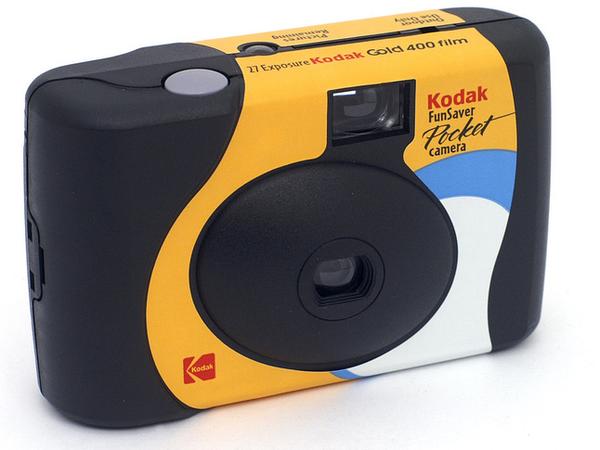
The Disposable Camera

We all know of the infamous disposable camera that was used on worldwide family holidays, and probably more developed in your memory is the fact that you still have boxes of photos somewhere in the house that the parents refuse to move. The camera is cheap by name and it was this main quality that made them attractive to the commercial market. Not only did it spawn an age of stereotypical  photographing movements - the winding- and a generation that would always make the clicky sound before taking a photo. The camera itself was a basic design with a fixed focus lens and more often than not filled with 135mm film.

The cameras were extremely cheap to manufacture and as well as creating a trend and breed of affordable and usable cameras it also created business as the average joe wasn't able to develop his own photos, meaning that high street shops were left with this job.

The most popular uses of these cameras were either as underwater cameras for those who couldn't afford another alternative as well as being used for large events where there was parties of people. Most popular being weddings as they would be placed on different tables for the bride and groom able to capture the entirety of their day.


Personally I grew up as these were becoming less and less relevant but to this day there is stil fragments of nostalgia when I either see or hold one. Sadly there are very few places that develop photos so in order to take pictures with the quality and style that disposables do then it will most likely be a self job. The quality of the photos produced can vary in the amount of noise, colour and quality as it all depends on the situation, but easier modern replica's have been invented since disposables have died out as there is a minority group of photographers who love the style of the photo. I am not one of them, I appreciate what the camera did but that is what it should stick to as that's what it is good at. Overall I wouldn't want one full time, but they have their uses.

Digital Single-Lens Reflex Cameras - or DSLR's

DSLR's, most likely the type of camera you tend to use or will own yourself. This specific type of camera was first invented back in 1969 with improvements being made to the original invention but the idea not being commercially available in 1991 by Kodak.

The process behind DSLR's uses mirrors, lenses and optics and the same mechanisms that have been used in SLR's to this day to produce a digital photo instead of one on photographic film. When the shutter is released on a DSLR the light travelling through the lens will instead expose the image sensor instead of the viewfinder which is what captures the image.


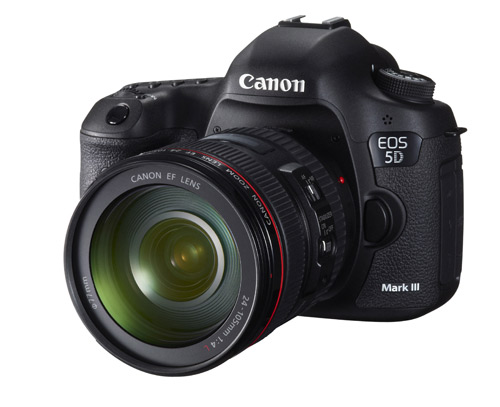
Canon and Nikon are currently the world leading manufacturers in DSLR's around the world with the Canon 5D Mark III being a very popular professional camera on the current market. DSLR's have changed photography as before they came along the process for taking, developing and distributing photographs would have taken days at least, whereas now it merely takes minutes.

By updating the process both the publics heart and mine have been won by the new design. I love it for its versatility and ease of use, of course the camera is complex but compared to the process being used two decades ago its a squeeze. It has allowed me to get into photography at a fairly amateur level and build upon my own skills. Its open-source technology which in my opinion is the best. Overall it has been one of the biggest steps for photograph making equipment and will be remembered in the timeline of photography.

Tuesday, 17 March 2015

Facing a single light in darkness


Standing out


A light in the darkness


Illuminating importance


Night Island


The Daguerreotype Photo

This specific technique of developing photographs originated in the early eras of photography having been invented in 1939 in France by Louis Jacques Mandé Daguerre. The unique style of capturing images by exposing a piece of silver plated copper directly to light by opening a flap to a case that the plate would be encased in would expose the plate and printing the image directly onto the copper plate. This type of photo is best known for its crystal clear image that it produces, as objects in the background often appeared clear cut in the composition.

To obtain the photo the plate would need to polished to an incredibly high standard then sensitized to iodine in a closed box. The plate is then placed inside the basic camera, more often than not at this time being a basic lightproof box with a single flap in front of a lens. When this flap is opened the light beams through the lens and hits the plate. Exposure can take anywhere between five and twenty minutes with the photo finally being viewable once developed over hot mercury.


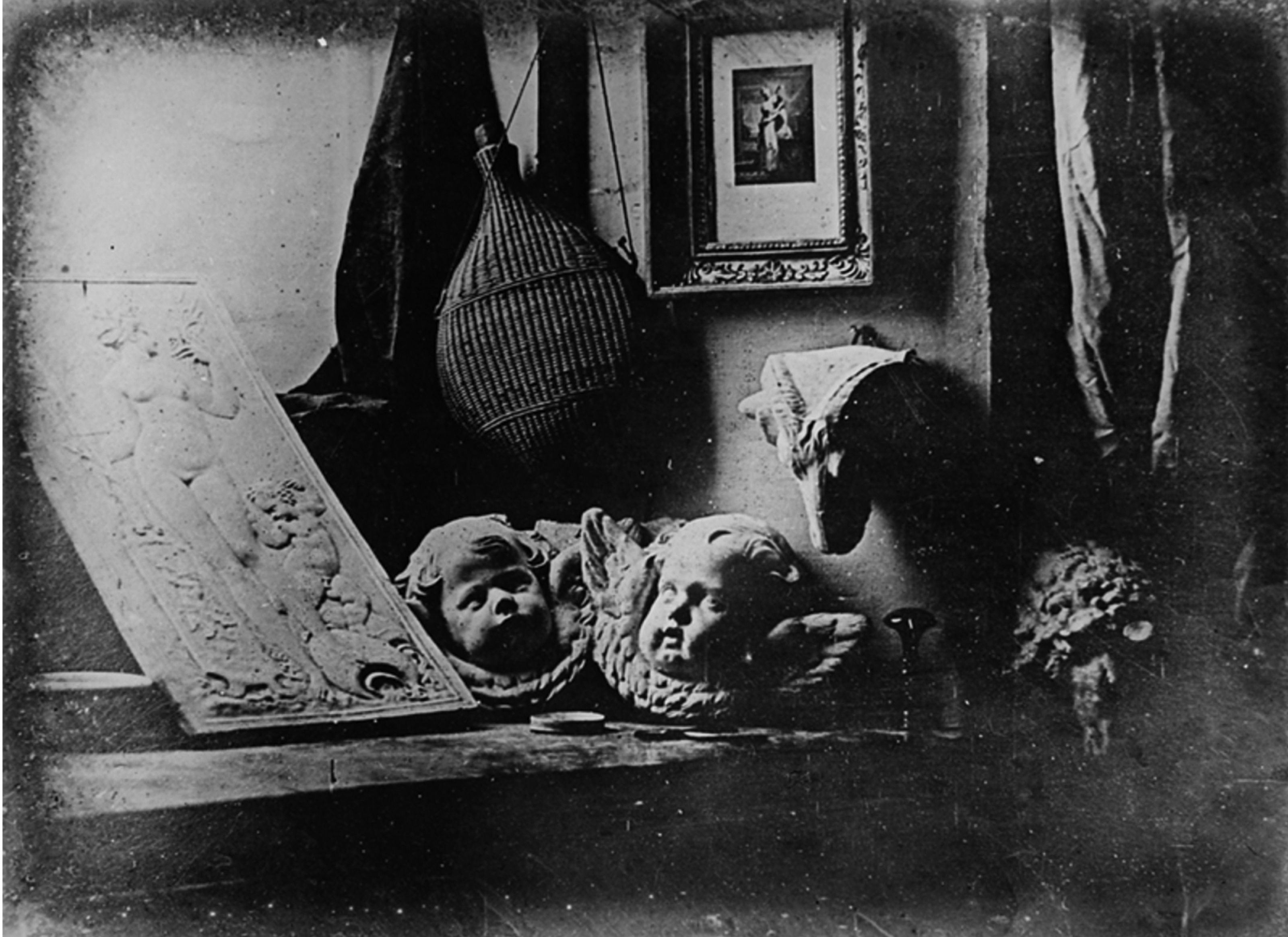
This is an example of one of the first ever daguerreotype photos consisting of a still life in an old house.I personally love the style of the daguerreotype on its own as well as appreciating while it wasn't the most efficient, it did pave the way for many other alternative methods that built upon this process. The lengthy exposure time allows for great areas of clarity which I admire in such a primitive way of taking photographs. Although it may not be so great for things like portraiture it creates amazingly detailed photos of still life. With the ability of hindsight I can say that out of the different styles of photographs, those printed on a copper plate and being high in detail personally appeals to me because of the physical artistic nature.