To obtain the photo the plate would need to polished to an incredibly high standard then sensitized to iodine in a closed box. The plate is then placed inside the basic camera, more often than not at this time being a basic lightproof box with a single flap in front of a lens. When this flap is opened the light beams through the lens and hits the plate. Exposure can take anywhere between five and twenty minutes with the photo finally being viewable once developed over hot mercury.
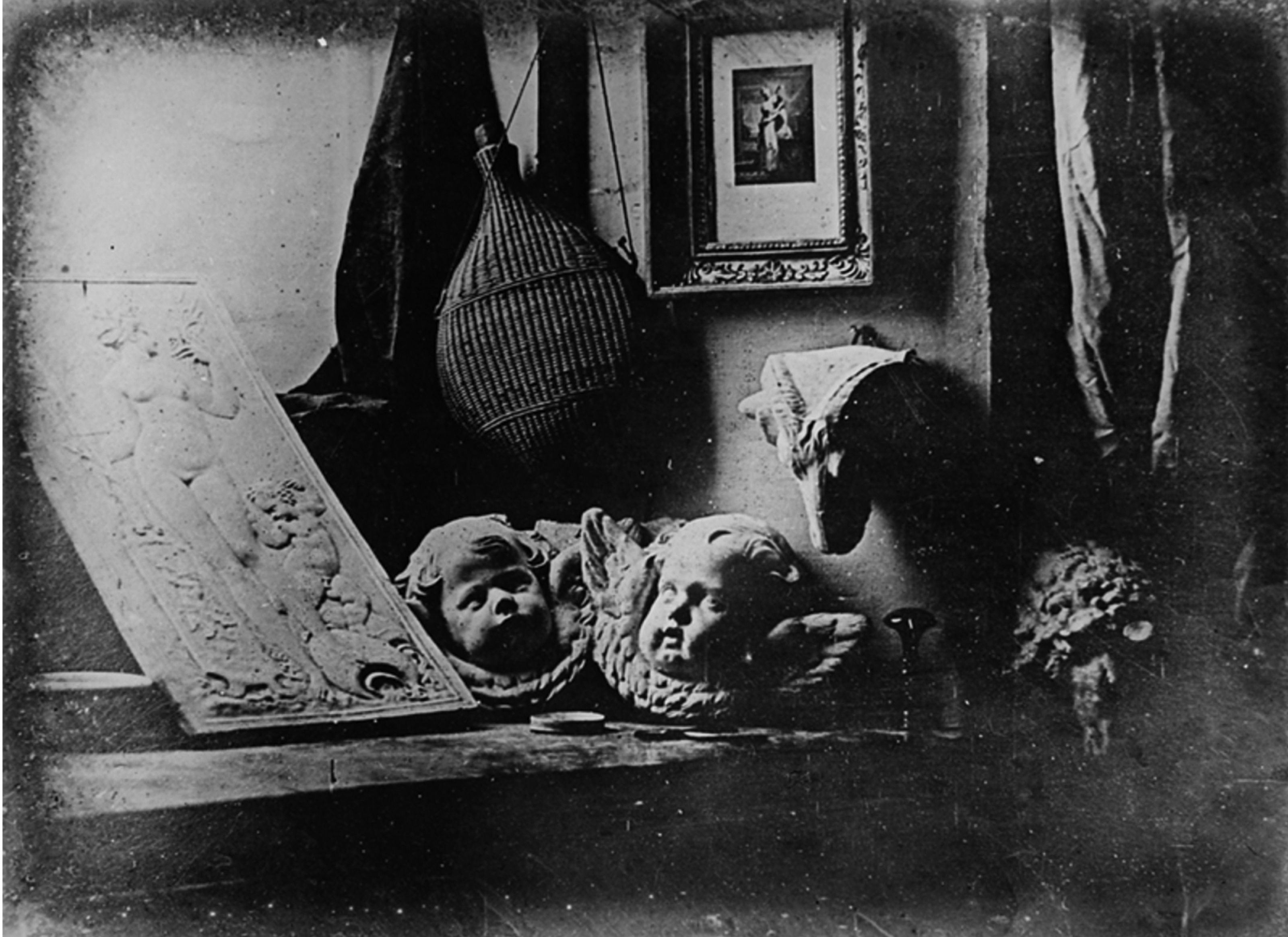
This is an example of one of the first ever daguerreotype photos consisting of a still life in an old house.I personally love the style of the daguerreotype on its own as well as appreciating while it wasn't the most efficient, it did pave the way for many other alternative methods that built upon this process. The lengthy exposure time allows for great areas of clarity which I admire in such a primitive way of taking photographs. Although it may not be so great for things like portraiture it creates amazingly detailed photos of still life. With the ability of hindsight I can say that out of the different styles of photographs, those printed on a copper plate and being high in detail personally appeals to me because of the physical artistic nature.

No comments:
Post a Comment